 how-to
How to Rekey House Locks After Moving
Table of Contents
- Why You Should Rekey House Locks After Moving
- Rekey vs. Replace Locks: Which Option Makes Sense
- What You'll Need: Tools and Supplies for Rekeying
- Step-by-Step: How to Rekey Your Locks
- Rekeying Multiple Locks to Match One Key
- Lock Rekeying Cost: DIY vs. Professional Service
- Common Mistakes to Avoid When Rekeying
- When to Call a Professional Locksmith
- Frequently Asked Questions
Last Updated: October 12, 2026
Why You Should Rekey House Locks After Moving
When you move into a new home, you don't know who has copies of the keys, which is why many homeowners choose to rekey house locks after moving.
Rekeying changes the internal pins inside your lock so your new key works instead of the old one, the hardware stays in place. At All-Tex Locksmiths, we help homeowners understand their options.
Rekey vs. Replace Locks: Which Option Makes Sense
You have two choices: rekey your existing locks or replace them. The right choice depends on your locks' condition and budget.
Rekey your locks if:
- Your existing locks are in good working condition
- The locks are a brand you like or trust
- You want to save money
Replace your locks if:
- Your locks are damaged, broken, or old
- You want to upgrade to higher-security locks
- You want smart locks or keyless entry
Rekeying works on most standard deadbolts and doorknobs. Many homeowners rekey the main entry locks and replace any damaged ones.
What You'll Need: Tools and Supplies for Rekeying
Rekeying requires specific tools and supplies, sold together in a DIY kit or gathered individually.
Essential tools:
- Screwdriver (usually Phillips head, sometimes flathead)
- Small needle-nose pliers
- Rekeying plug follower (prevents pins from falling out)
Supplies:
- Rekeying kit for your lock brand
- Your new key blanks
- Small container to hold pins (so you don't lose them)
Most kits include the plug follower, new pins, and instructions; you supply the screwdriver and pliers.
Choosing a DIY Lock Rekeying Kit
Your kit must match your lock brand and type.
Common lock brands:
- Schlage
- Kwikset
- Baldwin
DIY kits come with multiple pin sizes to match your new key, and some include a decoder tool. Follow the kit's instructions exactly, brands differ slightly.
Step-by-Step: How to Rekey Your Locks
Rekeying takes about 15 to 30 minutes per lock once you understand the process. Work in a clean, well-lit area so you don't lose small parts.
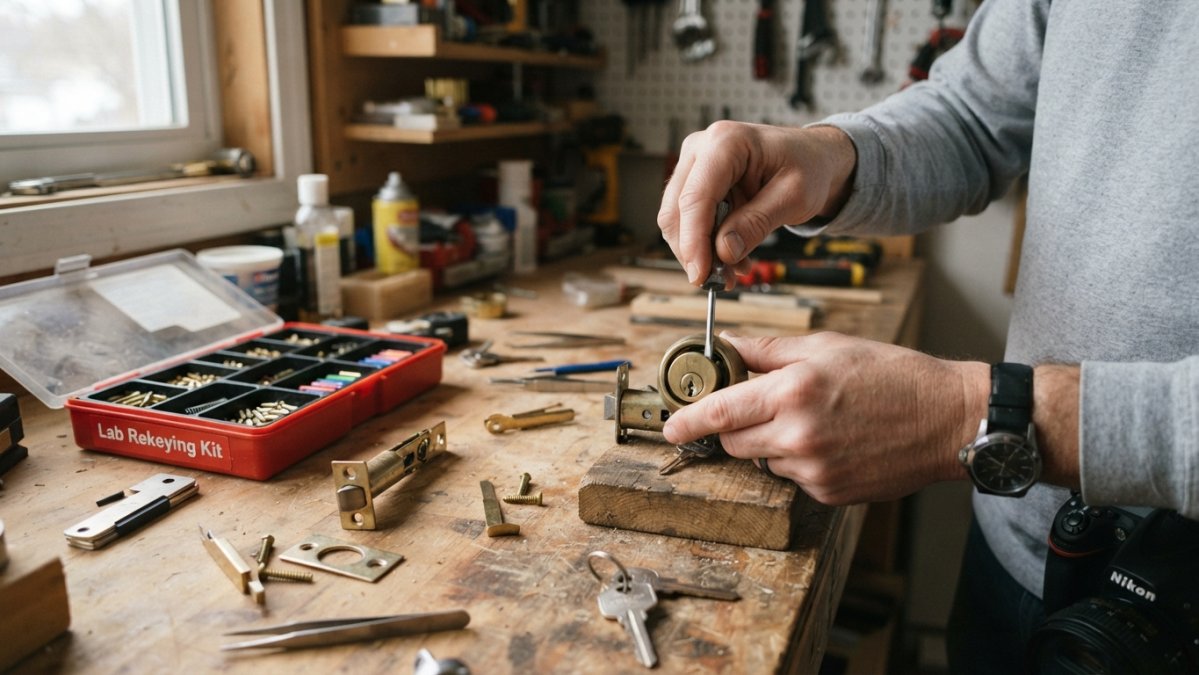
Step 1: Remove the Doorknob or Deadbolt
Most doorknobs and deadbolts are held in place with screws on the inside of the door.
How to remove the lock:
- Locate the screws holding the lock in place (usually on the interior side of your door)
- Use your screwdriver to remove all screws
- Pull the lock assembly out of the door
- Set aside any springs or small parts carefully
Some locks use a small release button instead of screws, check your lock's design or kit instructions.
Step 2: Extract the Lock Cylinder
The cylinder is the part that rotates when you turn your key. This is what you'll be rekeying.
To remove the cylinder:
- Insert your current key into the lock
- Turn the key to align the cylinder with the housing
- Look for a small hole or slot on the side of the lock
- Insert a small pin or tool into this hole
- Push gently while turning the key slightly
- The cylinder should slide out
Some cylinders need a bit of wiggling. Don't force it, if it's stuck, apply lubricant and wait.
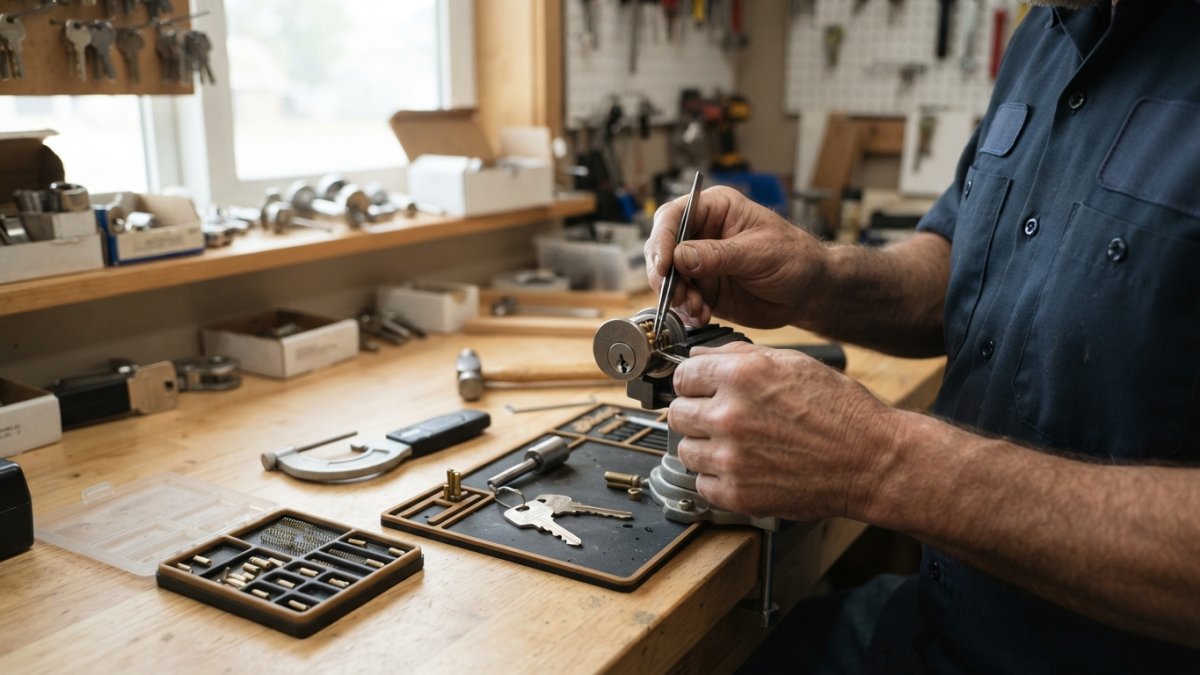
Step 3: Disassemble the Cylinder and Remove Old Pins
This is where precision matters.
Steps to disassemble:
- Place your plug follower into the cylinder opening (this prevents pins from falling out)
- Carefully push the plug out of the cylinder housing
- Once the plug is out, remove the plug follower
- Turn the plug upside down over a small container
- Gently tap or push out the old pins
Keep springs and pins organized, springs go back in the same order. Count them to confirm how many pins your lock uses (usually 5 or 6).
Step 4: Insert New Key Pins and Reassemble
This step determines whether your new key will work. Take your time here.
To insert new pins:
- Match your new key to the pin sizes using your rekeying kit's decoder or guide
- Insert springs first (one spring per pin position)
- Place the correct pin size on top of each spring
- Gently push the plug back into the cylinder housing
- Insert your new key and turn it to lock the pins in place
- Remove your new key
The pins should align perfectly with your new key. If they don't, you chose the wrong sizes and must start over.
Step 5: Test Your New Key and Reinstall
Test the lock thoroughly before reinstalling it.
Testing process:
- Insert your new key into the cylinder
- Turn it smoothly in both directions
- The cylinder should rotate freely
- Test multiple times to ensure consistency
If your new key doesn't turn smoothly, stop and recheck your pin sizes in Step 4. Once it works, reinstall the lock by reversing the removal process, screw it back tightly, and test your key in the installed lock before moving to the next door.
Rekeying Multiple Locks to Match One Key
Most homeowners want all their entry locks to work with the same key. This is called "keying alike."
Keying alike means using the same pin configuration for each lock, so your kit needs enough pins for several locks.
Process for keying alike:
- Choose your master key (the key you want to use for all locks)
- Determine the pin sizes needed for that key
- Use those exact same pin sizes in every lock you rekey
- Test each lock with your master key before reinstalling
Write down the pin sizes you use, one mistake means redoing that lock to match the others.
All-Tex Locksmiths can key all your locks alike professionally, ensuring every lock matches so one key opens everything.
Lock Rekeying Cost: DIY vs. Professional Service
Rekeying cost depends on whether you DIY or hire a pro, how many locks you have, and their type.
You get guaranteed results without risking damage.
A Practical Decision Guide
Use this framework:
| Factor | DIY Rekey | Professional Rekey |
|---|---|---|
| Upfront cost | Kit purchase only | Per-lock rate plus service call |
| Time per lock | 15-30 minutes once practiced | Often 10-15 minutes per lock |
| Tools needed | Rekey kit, screwdriver, pliers | None, locksmith brings everything |
| Skill required | Moderate; pin matching must be exact | None |
| Risk | Damaged pins, lost springs, mismatched cylinders | Covered by the locksmith |
| Best for | 1-3 standard locks, patient homeowners | 4+ locks, antique or high-security hardware, tight timelines |
| Keying alike | Possible but error-prone across many locks | Standard service, guaranteed match |
Choose DIY if: you have one to three standard deadbolts or doorknobs from a common brand, you're comfortable with small parts, and you have a free afternoon.
A common pattern: homeowners rekey the primary entry doors themselves and hire a locksmith for garage entry, back doors, and specialty hardware, splitting the cost while getting the whole house under one key.
Common Mistakes to Avoid When Rekeying
Even experienced people make mistakes when rekeying. Learning what goes wrong helps you avoid these problems.
Mistake 2: Losing small parts. Springs and pins are tiny.
Mistake 3: Forcing the cylinder out. If it's stuck, stop and apply lubricant, forcing it can permanently damage the lock.
Mistake 4: Not testing before reinstalling. Always test your new key in the disassembled lock first and fix any problem before reinstalling.
When to Call a Professional Locksmith
Some situations call for professional help, but the bigger question after a move is whether you've accounted for every key and access point on the property, not just the front door.
Call a professional if:
- Your lock is stuck or damaged
- You've tried rekeying and your key still doesn't work
- Your locks are antique, high-security, or use a restricted-key system
The Complete Move-In Security Checklist
Rekeying the front door is step one. A thorough move-in security pass covers every point where a key, code, or remote grants access:
Exterior entry points
- Front door, deadbolt and knob
- Back door and side doors
- Garage entry door (the door between the garage and the house)
Garage and outbuildings
- Garage door opener, clear the remote memory and reprogram your own remotes
- Keypad entry on the garage, change the PIN
- Shed, workshop, or detached garage, rekey or replace the padlock
Shared and overlooked access
- Mailbox key, request a new lock or key from your local post office if the previous owner kept it
- Community gate or building entry codes, ask the HOA or property manager to reset them
- Pool, gym, or clubhouse keys, return old ones and request new credentials
Digital access
- Smart locks, remove the previous owner's app access, delete old user codes, and re-pair the lock to your account
- Security system keypad codes, change the master code and any user codes
- Wi-Fi-connected doorbells or cameras, factory reset and set up under your account
Key Control After Rekeying
Once the locks are rekeyed, control who gets a copy:
- Label spares by door, not by address. Writing "back door" on a tag is fine; writing your address on a keychain that gets lost is not.
- Store one spare off-site with a trusted neighbor or in a secure location, not under a doormat or flowerpot.
- Track who has a key. Keep a simple list of household members, regular contractors, dog walkers, and cleaners who receive a copy.
Troubleshooting After Reassembly
If something feels wrong after reassembly, check these:
- Key sticks or won't turn: the pin sizes don't match the new key. Disassemble and re-check each pin against the kit's decoder.
- Cylinder binds: a spring may be seated crooked or a pin is in the wrong chamber. Re-seat springs one at a time.
- Lock works with the door open but not closed: the strike plate or latch is misaligned, not the cylinder. Loosen the strike plate screws and adjust its position.
If the lock still misbehaves after these checks, call a professional. A locksmith can diagnose pinning, cylinder wear, and alignment and rekey the whole house to one key you control.
Frequently Asked Questions
Should I rekey my locks when I move into a new house?
Yes. When you move into a new home, the previous owners, contractors, and real estate agents may have keys to your locks. Rekeying ensures only you have access to your property. This is one of the first security steps homeowners should take after moving. If the locks are old or damaged, replacement may be a better option than rekeying.
Is it cheaper to rekey locks or replace them?
Rekeying involves changing the internal pins rather than the hardware. Costs depend on the number of locks, their condition, and whether you do it yourself or hire a professional. If locks are damaged, corroded, or incompatible with your new key system, replacement becomes the more practical choice.
Can I rekey multiple locks to use the same key?
Yes. You can rekey multiple locks to match one key, a process called keying alike. This requires using the same pin configuration in each lock's cylinder. Most homeowners rekey their front door, back door, and garage entry to work with a single key for convenience. Ensure all locks use compatible cylinders before attempting this.
What's the difference between a DIY lock rekeying kit and hiring a locksmith?
A DIY rekeying kit lets you change pins yourself for lower cost, but requires patience, precision, and some mechanical skill. Professional locksmiths have specialized tools, experience with various lock types, and can handle complex systems or damaged locks. They also guarantee their work. Choose DIY for simple residential locks; hire a professional if locks are high-security, damaged, or unfamiliar.
Moving into a new home brings excitement and responsibility. Securing your locks immediately protects your family and belongings. Whether you choose to rekey your locks yourself or hire a professional, the important step is taking action. All-Tex Locksmiths is here if you need expert help rekeying your home. Call us at 817-558-7878 to discuss your lock security needs and get a quote for professional rekeying service. We're licensed, insured, and ready to help you feel secure in your new home.